
U.S. Treasury yields declined as investors increasingly anticipated a potential shift in Federal Reserve policy, signaling growing confidence that the central bank may be nearing the end of its tightening cycle. The move in the bond market reflects changing expectations around inflation, economic growth, and the future path of interest rates, all of which play a critical role in shaping global financial conditions.
The decline in yields suggests that investors are positioning for a scenario in which interest rates eventually move lower, even if the Federal Reserve maintains a cautious stance in the near term. As bond prices rise and yields fall, the market response highlights a reassessment of risk and a belief that monetary policy may become less restrictive over time.
Changing Rate Expectations Drive Bond Market Moves
Treasury yields are highly sensitive to expectations about Federal Reserve actions. When investors anticipate that the Fed will slow or reverse rate hikes, demand for longer-dated government bonds typically increases, pushing yields lower. Recent economic data pointing to moderating inflation and slower growth has strengthened the case for a potential policy pivot, driving renewed interest in Treasuries.
While policymakers have stopped short of signaling imminent rate cuts, their emphasis on a data-driven approach has encouraged investors to look ahead. Markets are increasingly focused on the idea that policy rates may be at or near their peak, shifting attention to how long rates will remain elevated rather than whether they will rise further.
Inflation Data Influences Investor Sentiment
Inflation remains at the core of Federal Reserve decision-making, and recent data has offered cautious optimism. Price pressures have shown signs of easing, with some measures of inflation cooling more consistently than earlier in the year. This has reduced fears that the Fed will need to tighten policy further, reinforcing demand for bonds.
Lower inflation expectations tend to support falling yields, as investors require less compensation for the erosion of purchasing power over time. As confidence grows that inflation is moving toward the Fed’s target, the appeal of fixed-income securities increases.
Yield Curve Reflects Economic Outlook
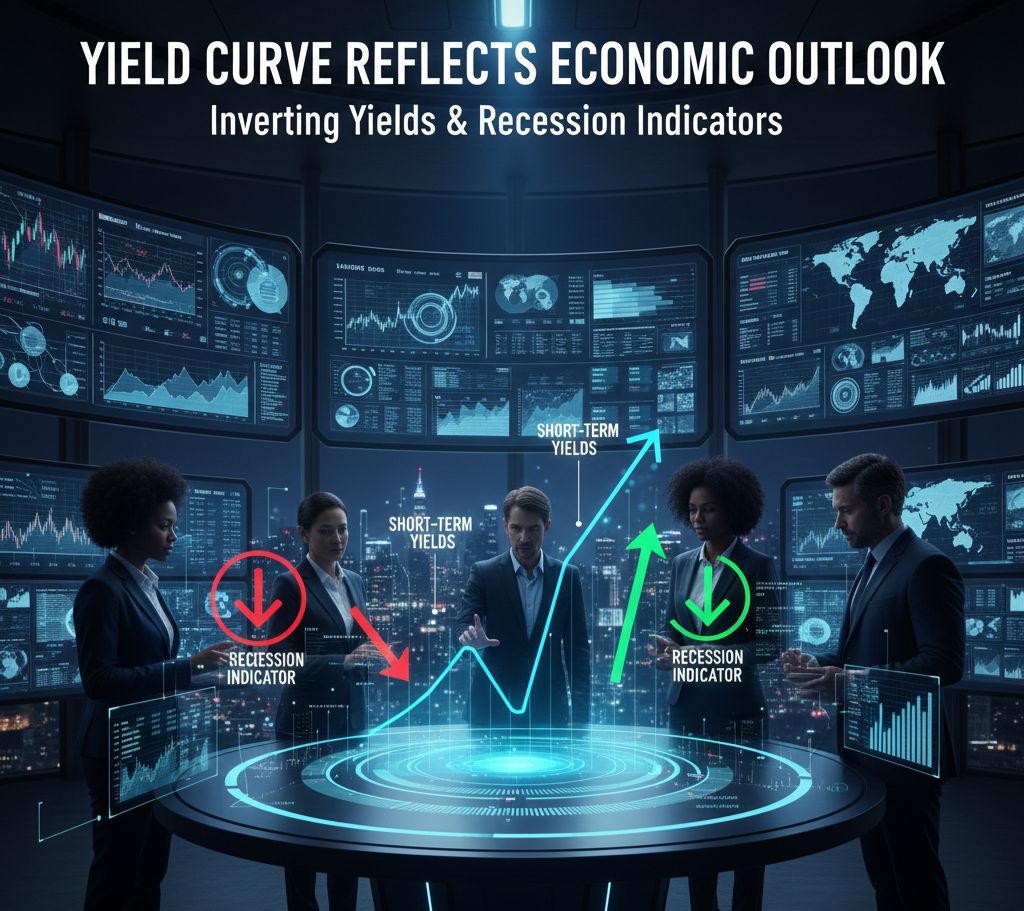
The decline in Treasury yields has occurred across multiple maturities, though movements have varied along the yield curve. Longer-term yields have seen notable drops as investors price in slower economic growth and the possibility of future rate cuts. Short-term yields, which are more closely tied to current Fed policy, have remained relatively elevated but have also shown signs of stabilization.
An inverted yield curve—where short-term yields remain higher than long-term yields—continues to signal caution about the economic outlook. Historically, such inversions have been associated with an increased risk of recession. However, many analysts argue that the current environment is unique due to structural factors and the unprecedented pace of recent policy tightening.
Impact on Financial Markets
Falling Treasury yields have broader implications for financial markets. Lower yields tend to support equity prices by reducing the discount rate applied to future earnings, making stocks more attractive relative to bonds. This dynamic has contributed to gains in interest-rate-sensitive sectors, such as technology and real estate.
The decline in yields has also influenced currency markets, placing some downward pressure on the U.S. dollar. A weaker dollar can provide a boost to U.S. exporters and multinational companies by making their goods and earnings more competitive overseas.
Federal Reserve Maintains Cautious Stance
Even though the market is hopeful, officials from the Federal Reserve are still emphasizing the need for caution. They have communicated that any move towards easing will rely on ongoing improvements in inflation and solid proof that economic situations justify a change in policy. The Fed is careful not to ease too quickly, as this could potentially bring back inflation pressures.
This conflict between market hopefulness and the central bank’s careful approach has led to a heightened sensitivity in financial markets. Investors are paying close attention to every economic report and policy announcement, looking for hints about when and how much any policy change might occur.
Global Implications of Lower U.S. Yields
U.S. Treasury yields serve as a benchmark for global interest rates, meaning their decline has implications beyond domestic markets. Lower yields can ease financial conditions worldwide, influencing capital flows, emerging market assets, and global borrowing costs.
As U.S. yields fall, investors may seek higher returns abroad, supporting risk assets in other markets. At the same time, changes in U.S. policy expectations can affect foreign central banks as they consider their own policy paths in relation to the Fed.
Risks and Uncertainty Ahead
While the recent drop in Treasury yields reflects growing confidence in a policy shift, risks remain. Inflation could prove more persistent than expected, forcing the Federal Reserve to maintain restrictive policy longer than markets anticipate. Additionally, unexpected strength in economic data could push yields higher again as investors reassess the outlook.
Geopolitical tensions, fiscal developments, and financial market stress also have the potential to disrupt bond markets and alter investor behavior. As a result, volatility in Treasury yields is likely to persist.
Outlook for the Bond Market
The decline in Treasury yields underscores a broader shift in investor expectations toward a less restrictive monetary policy environment. While the timing of any policy change remains uncertain, markets are increasingly focused on the idea that the peak in interest rates may be behind us.
As economic data continues to evolve, Treasury yields will remain a key barometer of investor confidence and policy expectations. Whether the current trend continues will depend on the balance between inflation progress and economic resilience, two forces that will shape the path of U.S. monetary policy in the months ahead.