
Job growth in the United States has begun to slow, signaling that the labor market is gradually cooling after a prolonged period of exceptional strength. While employment conditions remain healthy by historical standards, recent data suggests that the balance between labor supply and demand is improving. For policymakers, businesses, and workers alike, this shift marks an important phase in the broader economic adjustment following years of high inflation and aggressive interest rate increases.
According to the latest employment report, the pace of job creation has moderated compared to earlier in the year. Employers continue to add jobs, but at a slower rate, reflecting easing demand for labor across several sectors. This trend aligns with expectations that higher interest rates and slowing economic growth would eventually temper hiring activity.
A Transition From Overheating to Balance
The U.S. labor market emerged from the pandemic in an unusually tight condition. Demand for workers surged as businesses reopened and consumers ramped up spending, while labor supply struggled to keep pace. This imbalance contributed to rapid wage growth and raised concerns about sustained inflation.
The recent slowdown in job growth suggests that these pressures are beginning to ease. Job openings have declined from peak levels, voluntary quits have decreased, and hiring has become more selective. These developments indicate a labor market transitioning away from overheating and toward a more sustainable equilibrium.
Despite the slowdown, overall employment levels remain strong. The unemployment rate has edged slightly higher but continues to hover near historically low levels. This combination of slower hiring and low unemployment reflects a cooling process rather than a sharp deterioration in labor conditions.
Sector-by-Sector Shifts
The moderation in job growth is not uniform across the economy. Some sectors continue to add workers steadily, while others are experiencing more pronounced slowdowns. Healthcare and social assistance remain among the strongest sources of job creation, driven by demographic trends and ongoing demand for services. Government employment has also provided support, benefiting from post-pandemic hiring and infrastructure-related projects.
In contrast, sectors more sensitive to interest rates are seeing softer labor demand. Construction and real estate have been affected by higher borrowing costs, reducing new projects and employment growth. Manufacturing hiring has slowed as demand weakens both domestically and globally, while some technology firms have adopted a more cautious approach after rapid expansion in previous years.
Retail and hospitality, which had been major contributors to job growth during the recovery, are also showing signs of normalization. While employment levels remain elevated, hiring has slowed as consumer spending growth moderates.
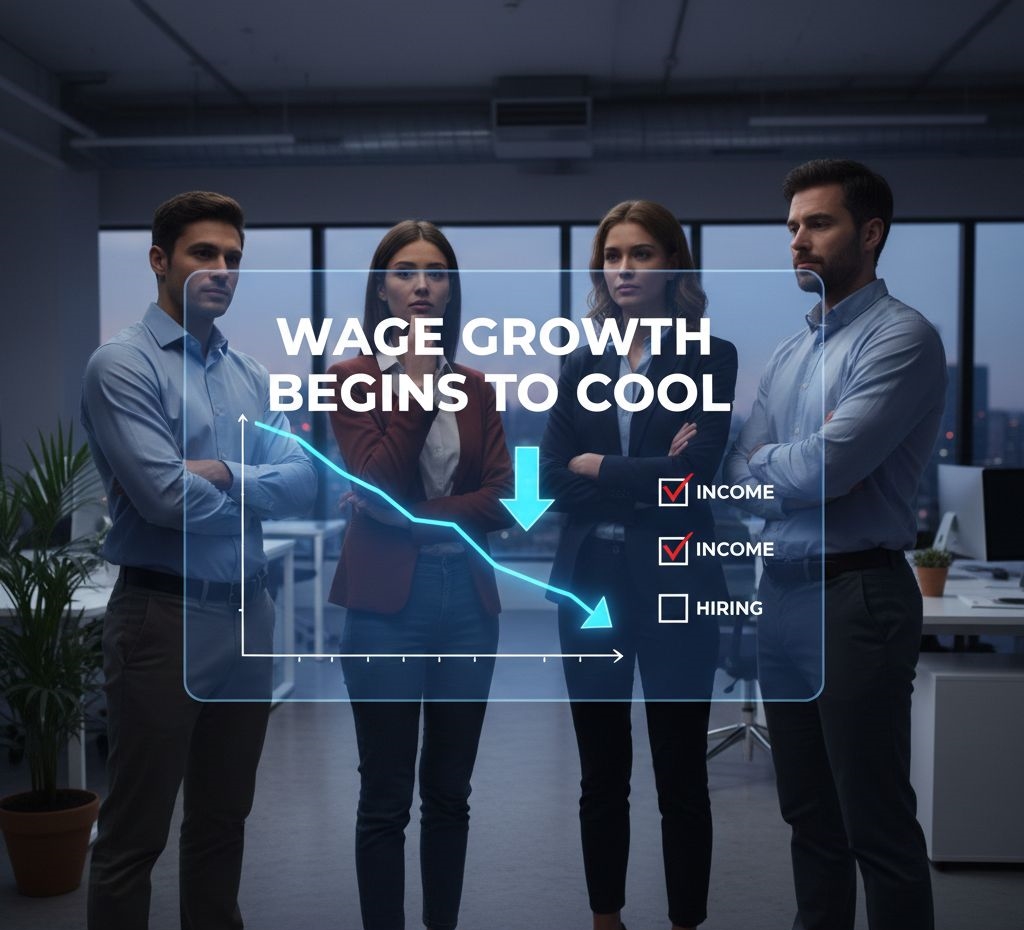
Wage Growth Begins to Cool
One of the most significant implications of slower job growth is its impact on wages. After years of rapid increases, wage growth is beginning to moderate. Although workers continue to see pay increases, the pace is easing as labor market tightness diminishes.
This trend is closely watched by the Federal Reserve, which views wage growth as a key driver of inflation, particularly in service-oriented industries. Slower wage gains reduce the likelihood of a wage-price spiral, in which rising wages lead businesses to increase prices, fueling further inflation.
For workers, moderating wage growth presents a mixed picture. On one hand, inflation has also slowed, allowing real wages to stabilize or improve. On the other, employees may find it more difficult to negotiate large pay increases or switch jobs for higher compensation, as opportunities become more limited.
Implications for Monetary Policy
The cooling labor market has important implications for Federal Reserve policy. One of the central bank’s primary goals is achieving price stability without causing widespread job losses. Slower job growth, combined with easing inflation, suggests that the Fed’s restrictive monetary stance is having the desired effect.
As labor market pressures ease, the case for further interest rate hikes weakens. Instead, attention is shifting toward how long rates should remain at current levels before policymakers consider easing. A gradual cooling in employment reduces the urgency to maintain extremely tight financial conditions and supports a more patient, data-driven approach.
However, Fed officials remain cautious. They have emphasized that while recent trends are encouraging, labor market conditions must continue to cool in a sustainable way. Any sudden rebound in hiring or wages could complicate the inflation outlook and delay potential policy adjustments.
Business and Consumer Reactions
For businesses, a cooling labor market brings both relief and challenges. Easier hiring conditions can reduce recruitment pressures and labor costs, helping companies manage expenses. At the same time, slower job growth may signal softer demand, prompting firms to adopt a more cautious outlook.
Consumers may also feel the effects. Slower job growth can reduce confidence, particularly if individuals perceive increased job insecurity. However, as long as layoffs remain limited and wages continue to rise modestly, household spending is likely to remain supported.
Risks and the Road Ahead
Despite the recent slowdown, the labor market remains vulnerable to broader economic forces. Prolonged high interest rates, reduced consumer spending, or global economic weakness could push job growth lower. Alternatively, continued strength in services demand could keep labor conditions tighter than expected.
The challenge for policymakers is to manage this transition carefully, ensuring that cooling does not turn into contraction. A gradual, orderly slowdown remains the preferred outcome, allowing inflation to ease while preserving economic stability.
A Key Indicator of Economic Adjustment
Slower job growth marks an important milestone in the U.S. economic adjustment process. While the labor market is no longer overheating, it remains fundamentally strong. This cooling trend supports the view that the economy is moving toward a more balanced state—one where inflation can return to target without triggering a severe employment downturn. As the data continues to evolve, the labor market will remain a central focus in determining the next phase of U.S. economic policy.