
The rate of inflation in the United States has decreased for the third month in a row, strengthening the belief that the lengthy phase of aggressive monetary policy may be coming to a close. The new figures have boosted the confidence of investors, consumers, and businesses, suggesting that the Federal Reserve might start lowering interest rates in the near future if current patterns persist. Although inflation is still higher than the Federal Reserve’s long-term goal, the consistent decline indicates a major change in the U. S. economic perspective.
The latest inflation report indicates that both overall inflation and core inflation saw smaller increases this month, showing reduced price pressures in several important parts of the economy. Drops in energy
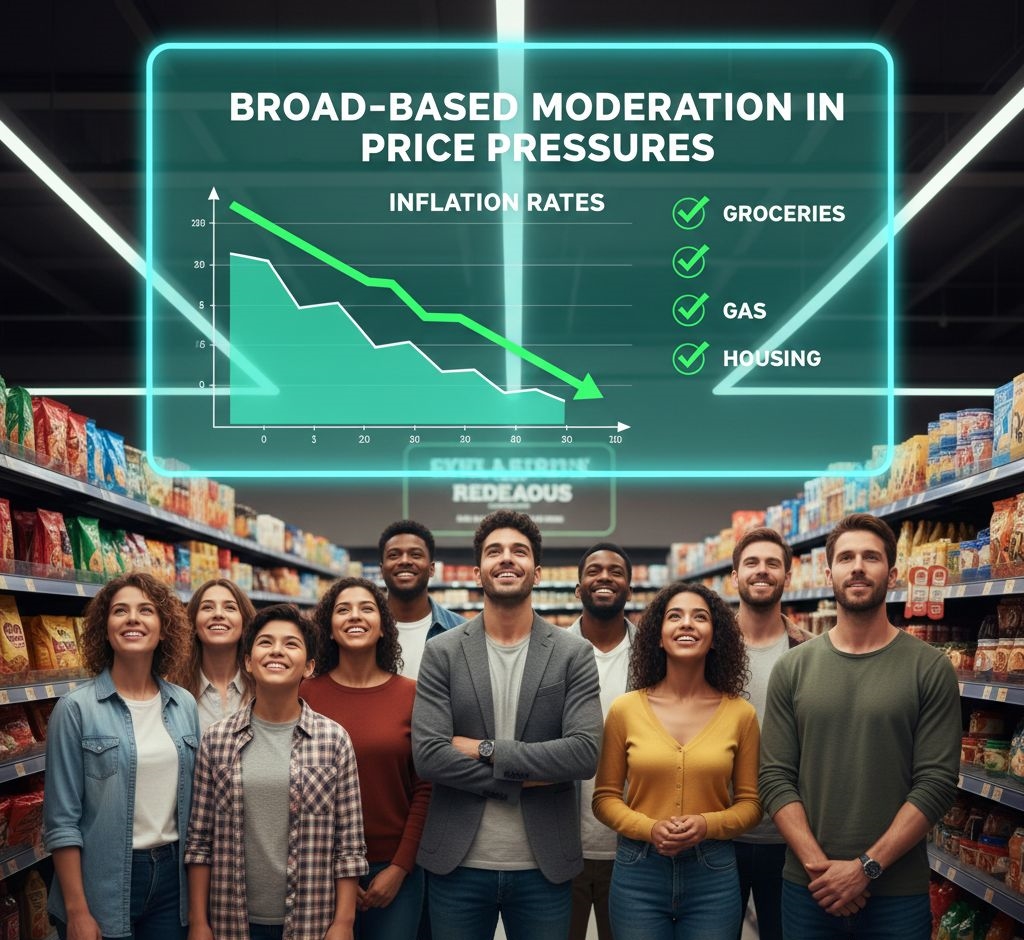
Broad-Based Moderation in Price Pressures
One of the most notable aspects of the latest inflation data is the broad-based nature of the slowdown. Goods prices, which surged in the aftermath of the pandemic due to supply disruptions and strong demand, have continued to normalize. Prices for items such as vehicles, household goods, and electronics have either stabilized or declined, reflecting improved availability and softer consumer spending.
Housing-related inflation, long considered one of the most persistent challenges for policymakers, is also showing early signs of moderation. Although rents remain elevated, the pace of increases has slowed, and new rental agreements suggest further cooling ahead. Given the heavy weight of housing costs in inflation calculations, continued easing in this category could play a crucial role in bringing overall inflation closer to the Federal Reserve’s 2% target.
Services inflation, excluding housing, remains more resilient but is also starting to show signs of cooling. Slower wage growth and reduced demand in discretionary services such as travel, dining, and entertainment have contributed to more moderate price increases. This trend is particularly important for the Fed, which has closely monitored services inflation as an indicator of underlying price pressures.
The Role of Monetary Policy
The Federal Reserve’s campaign to combat inflation has been one of the most aggressive in modern history. Since early 2022, the central bank has raised interest rates rapidly in an effort to curb demand and prevent inflation from becoming entrenched. These actions have tightened financial conditions, raised borrowing costs, and slowed economic activity across multiple sectors.
The latest inflation figures suggest that these measures are having their intended effect. As interest rates remain at restrictive levels, consumer borrowing has softened, business investment has become more selective, and overall demand has eased. Federal Reserve Chair Jerome Powell has repeatedly emphasized that policy decisions will remain data-dependent, and the recent inflation trend strengthens the case for a more patient approach.
While the Fed has not yet declared victory over inflation, the consistent slowdown has increased confidence that further rate hikes may be unnecessary. Instead, attention is shifting toward the timing and pace of potential rate cuts, which could begin later this year if inflation continues to fall and the labor market cools without significant disruption.
Market Reactions and Investor Sentiment
Financial markets have responded positively to the news of slowing inflation. Equity markets have rallied, particularly in interest rate–sensitive sectors such as technology, real estate, and consumer discretionary stocks. Investors see the prospect of lower rates as supportive of corporate earnings and higher valuations, especially after an extended period of elevated borrowing costs.
Bond markets have also reacted, with yields on U.S. Treasury securities declining as traders price in future rate cuts. Falling yields reflect expectations that inflation will continue to moderate and that the Federal Reserve will eventually ease its policy stance. Meanwhile, the U.S. dollar has shown signs of weakness against major currencies, consistent with a less restrictive monetary outlook.
Despite the optimism, some investors remain cautious, aware that inflation can prove stubborn and that unexpected shocks could reverse recent progress. Volatility remains elevated around key economic data releases, underscoring the market’s sensitivity to inflation-related developments.
Implications for Households and Businesses
For American households, slowing inflation offers some much-needed relief after years of rising living costs. Lower inflation means that wages can regain purchasing power, even if nominal salary growth slows. Essential expenses such as food, energy, and housing remain expensive, but the reduced pace of price increases helps ease financial pressure on families.
Businesses stand to benefit as well. Slowing inflation and the possibility of lower interest rates can improve planning and investment decisions. Reduced uncertainty around input costs and financing conditions makes it easier for companies to expand operations, hire workers, and pursue long-term strategies. Small and medium-sized businesses, which have been particularly affected by higher borrowing costs, could see meaningful relief if rates begin to decline.
Risks and the Path Forward
Despite encouraging signs, risks remain. Inflation could reaccelerate due to factors such as geopolitical tensions, supply chain disruptions, or unexpected increases in energy prices. Additionally, a still-tight labor market could reignite wage pressures, complicating the Fed’s efforts to achieve price stability.
Policymakers are also wary of cutting rates too soon, which could fuel renewed inflation or asset market excesses. The Federal Reserve is therefore likely to proceed cautiously, balancing the need to support economic growth with its mandate to maintain price stability.
A Turning Point for the U.S. Economy
The third consecutive monthly slowdown in U.S. inflation represents a potential turning point for the economy. While challenges remain, the trend has raised hopes that the worst of inflationary pressures may be behind, paving the way for a gradual shift in monetary policy. As investors, businesses, and consumers look ahead, the coming months will be critical in determining whether this progress can be sustained—and whether interest rate cuts move from possibility to reality.